Douglas Crammond
MA Professional Cookery, The Torridon, Wester Ross
1. Tell me which hotel you’re working in, what your role is, and what a typical day looks like for you.
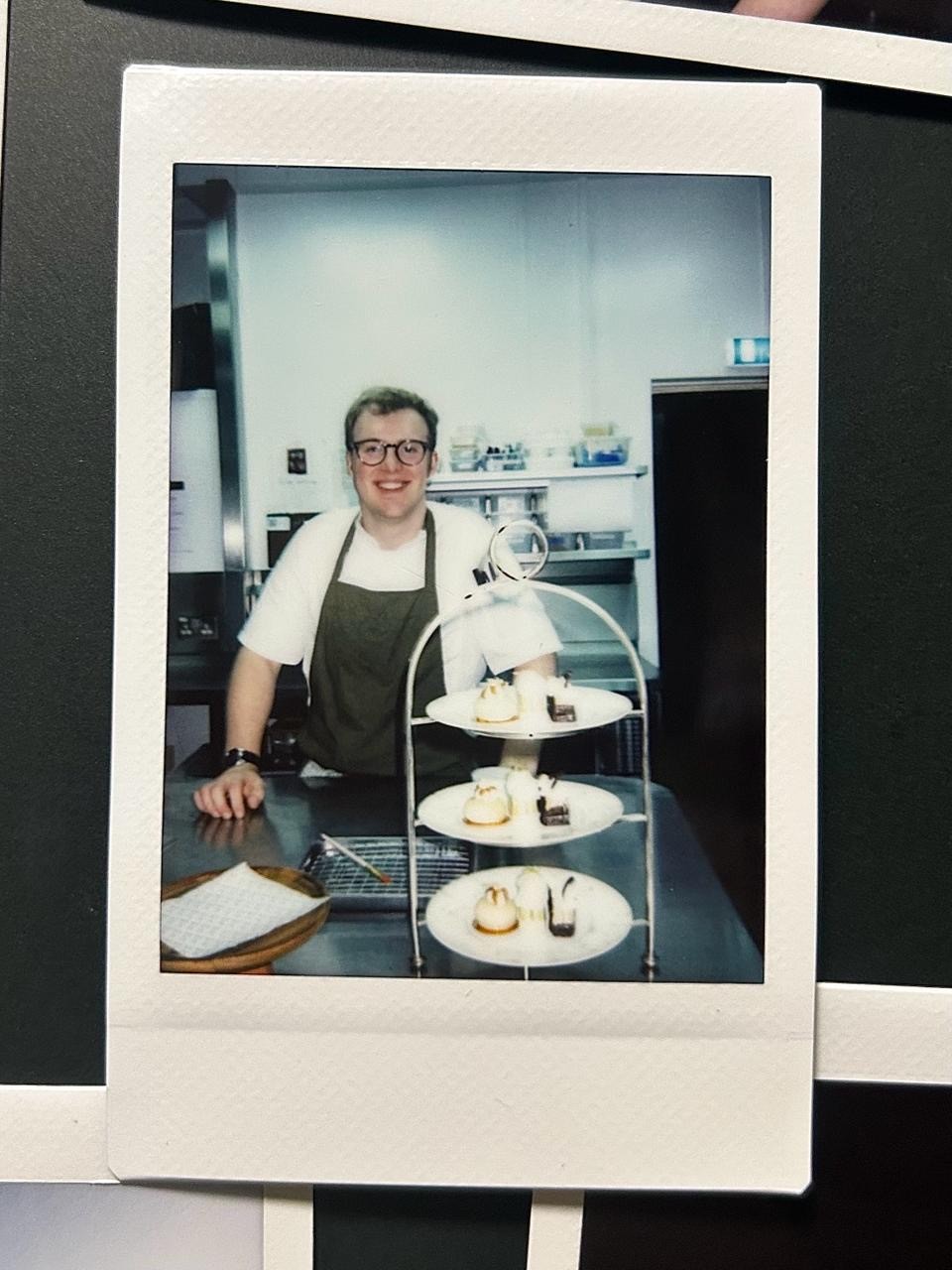
I’m working as a Chef Apprentice at The Torridon in the Scottish Highlands, primarily based at 1887, the fine dining restaurant. Because it’s a small, hands-on kitchen, I’m constantly rotating through different tasks and sections — which has been one of the most valuable parts of the apprenticeship. It’s given me a broad insight into how the whole kitchen functions and how each role contributes to service.
My day usually starts with breakfast service, either working the pass or beginning mise en place. It’s been a great environment for developing speed, accuracy, and confidence, and I’ve learned a lot both from the Head Chef’s guidance and from simply getting into the rhythm of service. After breakfast, I move into prep for the evening tasting menu.
Right now, I mainly support the canapés and starters section, often running those plates during service. It’s exposed me to a wide range of techniques — making pastry cases, preparing mousses and emulsions, refining knife skills through tartares and precise vegetable work, and most importantly, maintaining consistency across every small component. Because The Torridon focuses heavily on sustainability and garden-led produce, I’ve also developed a strong awareness of waste reduction, ingredient efficiency, and responsible use of what we harvest.
I also frequently run lunch service, which involves organising my bench, checking labels, managing fridges, and planning my priorities so the rest of the day flows smoothly. Learning to structure my own mise en place has been a huge part of becoming more independent.
Service at 1887 is where everything connects. After sending canapés and starters, I might support the mains with dressing and plating or work closely with pastry on the final courses. The refined nature of the menu requires clean, organised work and absolute consistency. Being so close to the senior chefs has taught me how vital timing, communication, and precision are in a fine dining environment.
My day usually ends with a full clean-down, restocking, and planning the next day’s prep list. Even small improvements — a better setup, more efficient prep flow, clearer communication — make noticeable differences.
Overall, a typical day at The Torridon is a mix of learning, contributing, and gradually taking on more responsibility. The constant variety has played a massive role in my development so far.
2. How long have you been on your apprenticeship, and how do you feel you’ve progressed since starting?
I’ve been on my apprenticeship for almost six months, and the progress has been significant — both in skill and confidence. Before starting, I had very limited professional kitchen experience, and only a basic understanding of cooking techniques. Now, I feel myself moving from simply observing processes to actually driving them, taking full responsibility for elements of a dish during service.
One of the biggest areas of growth has been my understanding of flavour — how seasoning, acidity, heat, and texture interact, and how small adjustments can completely elevate a dish. The Torridon’s respect for produce has really shaped how I think about food.
Being in a remote location has also accelerated my learning. With fewer external suppliers, a lot is done in-house. Recently, we broke down a whole deer for use across the menu, and on another day processed game birds from plucking to portioning. Six months ago, I would never have imagined I’d have the confidence to tackle tasks like these.
On a personal level, working in such a small brigade has pushed me to improve my communication and teamwork. You contribute from day one here, and that responsibility has helped me grow quickly and feel truly integrated into the kitchen.
3. What has been your biggest highlight or proudest moment so far?
My proudest moment has been being trusted to take responsibility for a full dish on the 1887 tasting menu — the sea bass and langoustine tartare. It was the first complete dish I learned, and it represents the ethos of the restaurant: precision, elegance, and respect for local produce. Being trusted to prepare and plate it consistently in service felt like a milestone where my learning really clicked into place.
Another highlight has been applying what I’ve learned in the kitchen to my own assessment dishes. Being able to translate those techniques into something personal has been incredibly rewarding, and it’s shown me how much of the knowledge I’ve built is now instinctive.
4. What are your career goals after completing the programme, and how is the apprenticeship helping you get there?
After finishing the programme, I want to continue developing as a chef while exploring the wider food world — especially recipe development, food media, and creative work that links cooking with design. The apprenticeship has shown me just how many paths exist in hospitality. Speaking with chefs, producers, and specialists through the HAS masterclasses has broadened my perspective and encouraged me to think beyond the traditional kitchen route.
At the same time, I want to continue working in kitchens that value seasonality, sustainability, and provenance, which have become core principles in how I approach food. The Torridon’s commitment to responsible sourcing and low-waste cooking has shaped my ethos and clarified the kind of chef I aspire to be.
This apprenticeship is already giving me the foundations I need — strong technical skills, a deeper understanding of flavour, and the confidence to work both independently and creatively. It has also sparked the curiosity and ambition to contribute to the food world through ideas, writing, and recipe development alongside hands-on cooking.
5. What advice would you give to someone thinking about applying to HAS or starting the apprenticeship?
My biggest advice is to approach the apprenticeship with curiosity, openness, and a willingness to learn. You don’t need to know everything when you start — what matters most is enthusiasm and being proactive in asking questions.
Working in a small brigade means you’re involved from day one. Embrace feedback, take on tasks even if they feel outside your comfort zone, and use your assessments as opportunities to explore ideas that interest you.
I’d also encourage future apprentices to stay connected to the ingredients. Understanding seasonality, sustainability, and why we handle produce in certain ways gives your cooking far more depth than technique alone.
Finally, remember that the apprenticeship is something you can shape. Having the freedom to choose your own modules — along with support from mentors — means you’re constantly encouraged to push yourself while being guided. If you commit to the process with the right mindset, it becomes more than just training. It becomes a journey where you build skills, confidence, and a clearer sense of your direction in the industry.